

How I accidentally became a startup’s marketing department for a ghost town
I joined an AI social media startup right after a layoff and a pivot. The company was rebuilding from scratch: no brand, no marketing assets, and a “product” that was still wireframes in Figma.
So we ran a brand awareness experiment using a channel most marketers ignore: GIPHY.
What we did
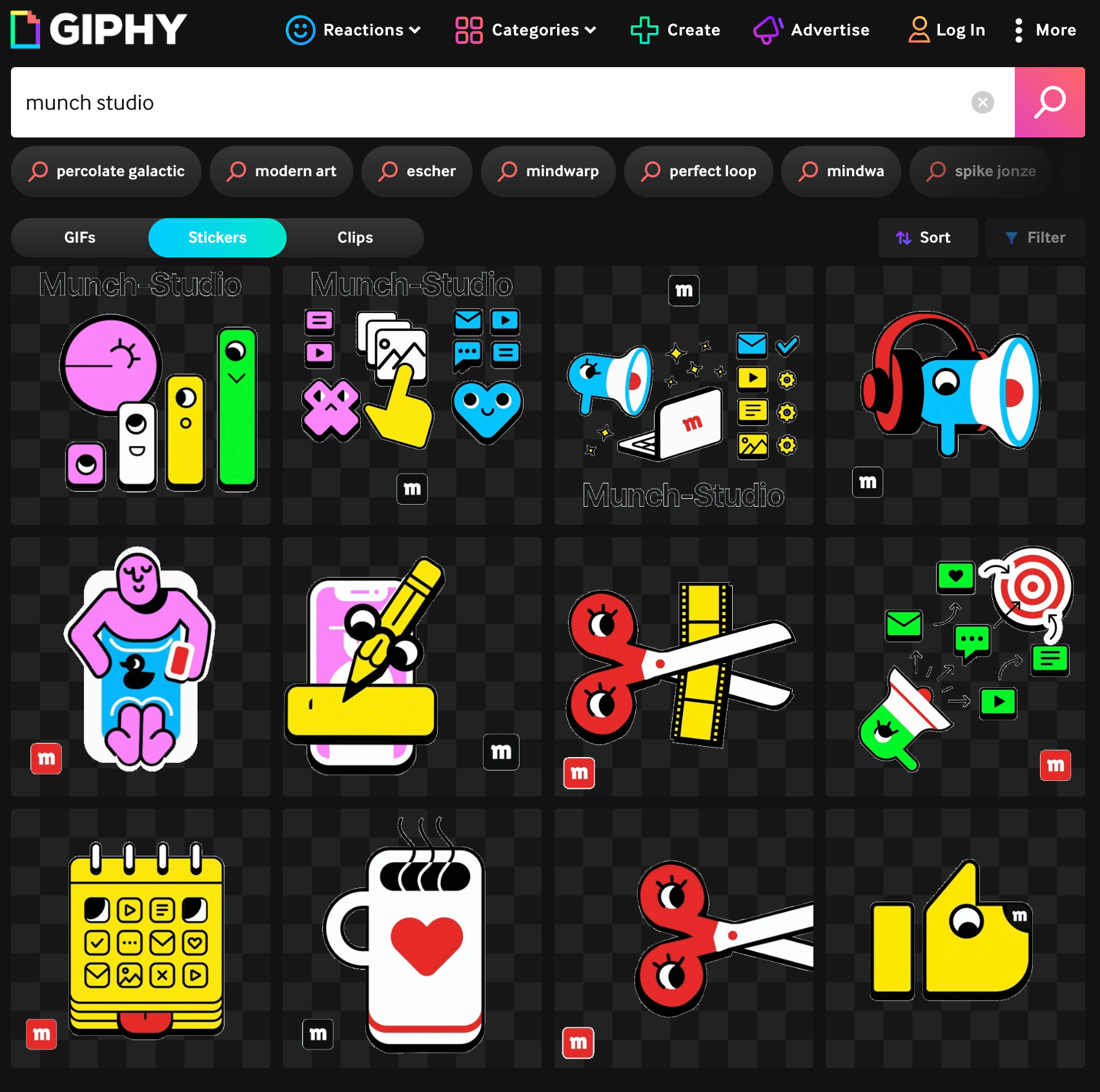
We created a small pack of useful stickers people would actually want in daily chats (not product demos, not logo spam). Then we uploaded them to GIPHY with search-driven keywords, the same words people type inside Slack, iMessage, WhatsApp, and Instagram DMs.
Because GIPHY is embedded everywhere, a sticker that ranks for common searches becomes free distribution inside real conversations.
🔥 The result
268,000+ organic impressions. $0 spend.
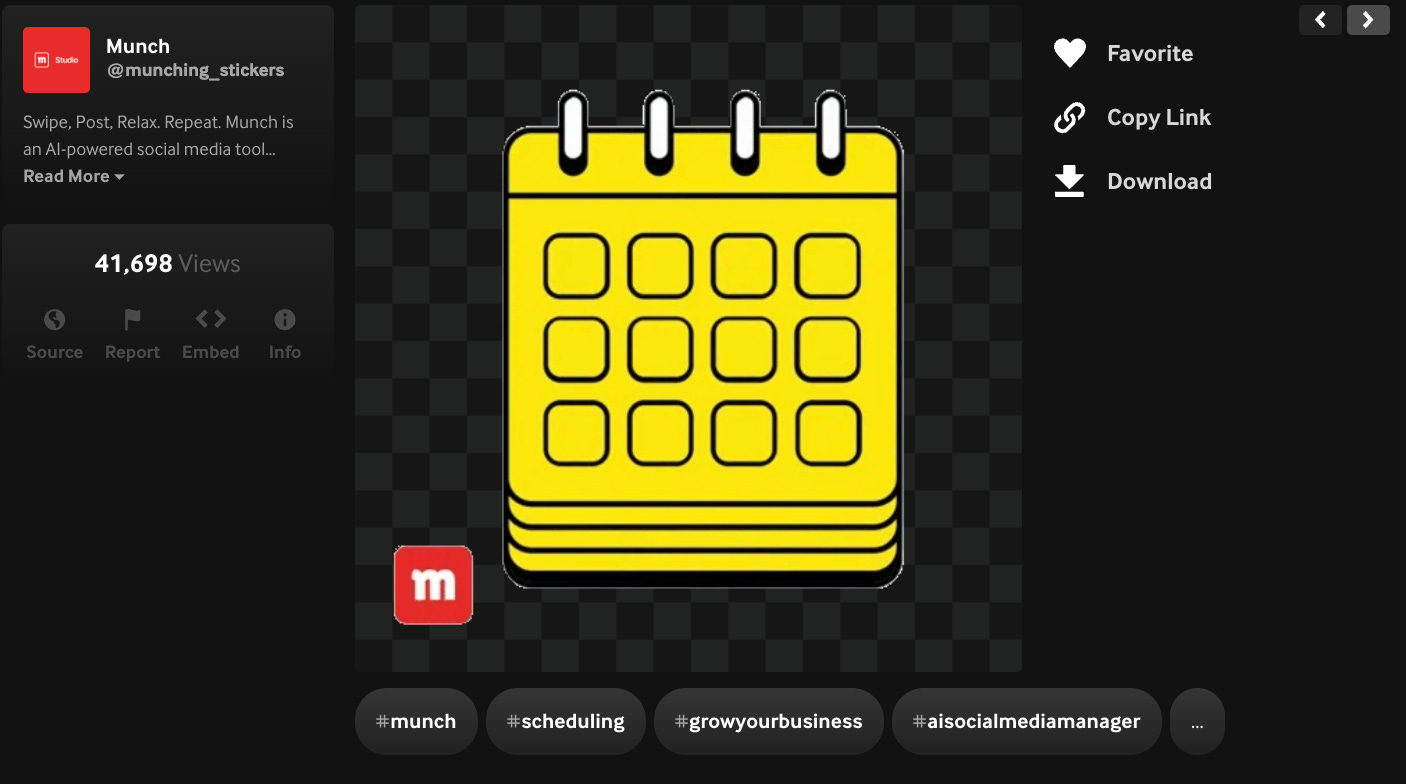
One sticker alone hit ~41.7k views.
No, you can’t draw a straight line from “someone used our sticker in Slack” to “someone signed up.” That’s not how top-of-funnel works. But getting your brand seen hundreds of thousands of times in non-ad contexts, in friends’ chats and team channels, is real distribution.
🎨 The Backstory: Building a Brand From Zero
When I walked in, there was nothing. No visual identity. No explainer videos. No social assets. No app to show. Just a vision for an AI-powered automation tool and a team trying to figure out what comes next.
So I called Tom Engler (hands down the best creative illustrator and animator I know). Together, we built the entire brand from scratch: logo, color palette, character mascots, the works.
Once we had the visual identity locked, we created a welcome video, which was then repurposed into Lottie animations and GIPHY stickers, literally just invested one hour on Giphy. That's when I started thinking about distribution.
The obvious plays (LinkedIn posts, Twitter threads, paid ads) felt boring. Everyone does those. And we had zero budget for paid acquisition anyway.
That’s when I remembered something I’d read in Tom Orbach’s Marketing Ideas newsletter. He wrote about using GIPHY stickers as a distribution channel (GEO). The concept stuck with me: people search for stickers and GIFs constantly, and if your brand shows up in those results, you’re getting free impressions in spaces ads can’t reach.
I decided to test it.
The play: Create branded stickers and GIFs people would actually WANT to use in their daily conversations. Not product demos. Not logos slapped on animations. Genuinely useful visual content that happens to carry the brand.
📊 The Results
Here’s what 268,000+ impressions looked like broken down:
Calendar sticker: 41,698 views
Coffee mug sticker: 17,862 views
“Relaxing” character sticker: 8,505 views
Plus dozens of other stickers adding up to 268,000+ total impressions
All organic. All free. All from people voluntarily sharing branded content in their group chats, Slack channels, and social DMs.
Now, let’s be honest about what this means.
Brand awareness is the long game. You can’t attribute a signup directly to someone seeing your sticker in a group chat three weeks ago. That’s not how top-of-funnel works.
But here’s what IS measurable: 268,000 times, someone saw this brand in a context that wasn’t an ad. In their friend’s message. In their team’s Slack. In a place where brands usually don’t reach.
For a startup with zero marketing budget, that’s not nothing. That’s distribution most companies pay thousands for.
The real question is: was there something underneath to convert all that awareness?
💀 The plot twist
The marketing didn’t fail. It worked exactly as brand awareness should.
What failed was what came next.
Some startups hire marketers hoping marketing will create product-market fit. I thought I was joining a growth role. What I walked into was a prayer: almost no active users, “traction” that was more aspiration than reality, and a short timeline that basically matched how long it takes to realize the foundation isn’t there.
Three months later, I was out, not because awareness didn’t happen, but because there was nothing underneath it to convert.
✅ The framework (steal this)
Make stickers people would use even if your brand didn’t exist.
Keyword like your audience searches (emotions + situations: “tired,” “meeting,” “coffee,” “deadline”).
Let compounding do the work: every use shows your brand to the whole chat.
The red flags I now ask before any role
“Can I see activation (not signups)?”
“What’s your retention curve?”
“Why is this role open now, scaling what works, or hoping I’ll make it work?”
🔍 The Red Flags I Now Check Before Any Role
After this experience, I never accept a role without asking these questions:
“Can I see your activation metrics?” Not signups. Activation. How many people actually USE the product after signing up?
“What’s your current retention curve?” If they hesitate or pivot to “we’re early stage,” that’s your answer.
“Why is this role open now?” Listen for whether they’re scaling something that works or hoping you’ll make something work.
“Who held this role before, and what happened?” If the answer is “we’re building this function for the first time” at a company that’s been around for years... ask why.
Product-market fit isn’t a vibe. It’s data. If they can’t show you the data, assume it doesn’t exist.
🔥 Bottom line
GIPHY is still wide open for free brand impressions.
Just don’t build awareness for a ghost town.
If you’re a founder: don’t hire for hope—hire for scale.
If you’re job hunting: check the data before you sign.
See you next week ✌️